You've seen this website a thousand times.
Clean layout. Decent logo. And right there at the top, the hero photo. Five strangers in crisp button-downs, arms crossed, smiling at something off camera. Or the handshake. Or the multi-ethnic team pointing at a laptop like they've never seen one before. Your eye moves past it in half a second because your brain has already decided you're on another generic small business site.
That photo didn't just fail to help. It actively hurt you. Stock photos don't just waste space on your homepage. They quietly tell every visitor that you're hiding something, whether you meant to or not.
The Three-Second Trust Test
You've got about three seconds to convince a website visitor they're in the right place. Not three minutes. Three seconds. In that window, they're asking one question: are these people real?
A real photo answers yes immediately. A stock photo answers no just as fast. Visitors don't consciously say "that's stock." They feel it. Something's off. The light is too perfect. The teeth are too white. The office looks like a showroom. They move on and they don't even know why.
Trust in a local service business is the whole game. You're asking a stranger to let you into their house, under their sink, over their kids' braces, into their financial statements. If your website signals "we couldn't bother to show up on camera," you've already lost.
How Visitors Tell Instantly (Even If They Can't Explain Why)
Humans are disturbingly good at spotting fake. The internet has trained your customers to detect stock imagery at a subconscious level. A few tells we watch for when we audit a site:
- Too clean. Real workshops have clutter. Real offices have a cord showing. Stock photos look like a magazine.
- Wrong climate. That palm tree in the window of your "Little Rock office" is working against you.
- Wrong age range. Stock tends to skew young and coastal. If your crew is mostly guys in their 40s with beards, your site shouldn't show 22-year-olds in blazers.
- The unearned smile. Real people at work don't smile like that. That's a photographer smile.
- No names. "Our team" with no names or captions is a tell that the faces aren't actually yours.
Visitors don't trust what looks polished. They trust what looks true. Those are different things.
Why Real Photos Win (and by How Much)
Every time we've replaced stock imagery with real photos on a client site, conversion goes up. Every time. The gains vary by industry and by what the stock photos were hiding, but 20 to 50% lifts in form fills and calls are common. A remodeler we worked with saw booked consultations jump nearly 40% the month after we swapped hero stock for actual job site and team photos.
That's not because the new photos were beautiful. Some weren't. They were real. Here's what real photos do that stock can't:
- They prove you exist. A photo of your physical shop in Jacksonville or your crew standing next to a truck with your logo on it does more for trust than any headline you could write.
- They pre-qualify. If somebody sees your team and thinks "these are my people," they're closer to buying than any stock model could bring them.
- They survive comparison. When a visitor bounces between your site and a competitor's, the real-photo site wins almost every time.
- They feed every other channel. Real photos work on Google Business Profile, Instagram, email, ads, everywhere. Stock looks like stock in every context.
A Good Phone Photo Beats a Bad Stock Photo
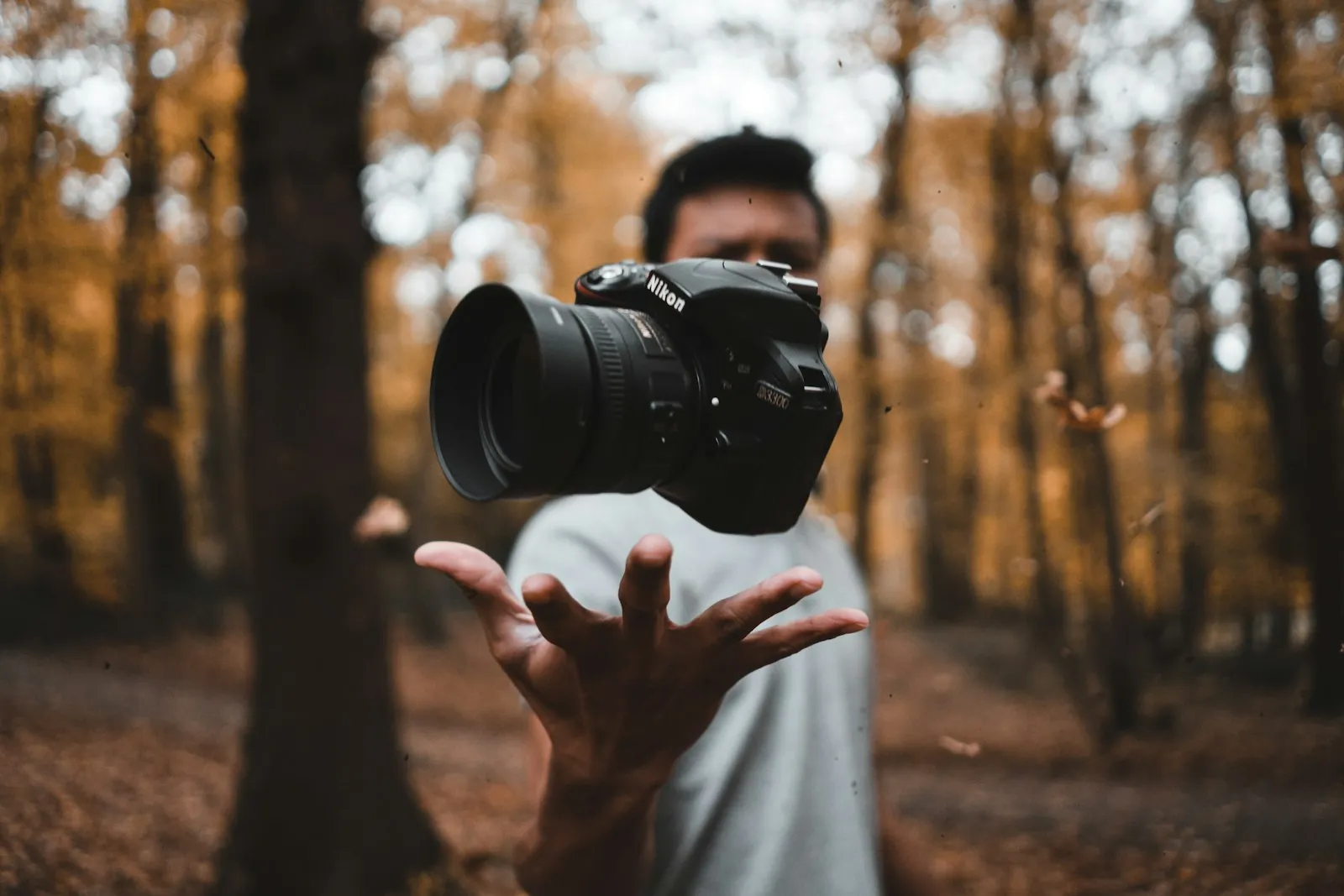
Don't read this and decide you need a $10,000 brand shoot to fix your homepage. You don't. An iPhone and 30 minutes of decent light will outperform the Shutterstock library every time. We've built hero sections for clients using phone photos taken on a job site that Tuesday. They converted better than the stock version the following week.
The rules are simple:
- Natural light beats flash. Shoot near a window or outside in open shade. Avoid harsh overhead sun.
- Shoot horizontally for web use. Vertical works for social. Your hero banner is horizontal.
- Get closer than feels comfortable. Crop tight on hands, tools, faces, product details.
- Show action, not posing. People working beats people smiling at a camera.
- Clean the frame. 10 seconds of tidying beats an hour of Photoshop later.
When you graduate from phone to produced, that's where a real photo and video team earns their keep. But starting out, stop letting "we haven't done a shoot yet" be the reason you run stock on your most important page.
What to Shoot Yourself This Week
Here's the shot list we give clients who want to DIY their way off stock photos before we come in for a produced shoot. If you spend a weekend on this, you'll have enough content for the next six months of web, social, and email.
- Team portraits. Every person who touches a customer, shot against a plain wall with window light. Smile, don't smile, one of each.
- The workspace. Your shop, office, truck, studio. Wide shot, detail shots, you-in-it shot.
- The work itself. Hands doing the thing you get paid to do. Tools mid-use. Before-and-after.
- A real customer moment. Handoff, consultation, final walkthrough. Ask permission, tag them, thank them.
- Behind the scenes. The boring stuff. Setup, cleanup, morning huddle. This is the content that feels the most real.
- The owner. You. On camera. Ten solid portraits. Your face is a trust shortcut.
We run brand photo and video shoots for Arkansas businesses. One day on site. Enough content to feed every channel for 6 months.
See Video & PhotoWhen Stock Is Still OK
Not every image has to be yours. There are a few places stock photography still earns its spot, and pretending otherwise is dishonest. Stock is fine when:
- It's clearly an illustration or icon. Nobody expects you to commission an original vector for a feature list.
- It's a background texture or pattern. Wood grain, paper texture, a geometric backdrop. Nobody reads this as "your team."
- It's a location you can't shoot. An aerial of Little Rock, a drone over the Ozarks, Capitol Avenue at sunrise. Licensed stock makes sense here.
- It's historical or editorial. A news photo, a throwback, a reference image.
Where stock is never OK: your team page, your about page, your testimonials, your hero section, or anywhere a visitor is deciding whether to trust you personally. Those spots require real.
Trust Is Built in Pixels
The photo at the top of your homepage is doing more work than your headline. More work than your tagline. Sometimes more work than your logo. It's the first thing a visitor processes and it shapes every other piece of information on the page.
Fake photos signal a fake business. Real photos signal a real one. That's all your customer is trying to figure out before they decide whether to keep scrolling or close the tab.
So go take the photos. Or hire somebody who shoots for a living. But stop letting stock do the job your real business already does better.